
Service Overview
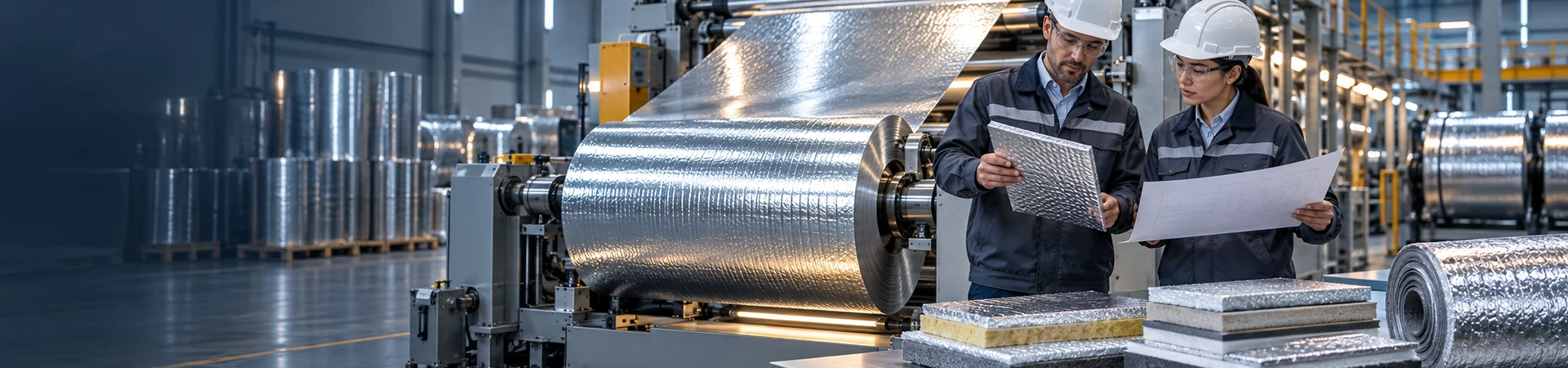
Every insulation or barrier application places a different combination of demands on the finished material. A roof underlay may need high tear resistance and dependable radiant-heat reflection, while an industrial facing may require improved moisture protection, controlled surface adhesion or compatibility with downstream converting. Flexible packaging may add requirements for heat sealing, puncture resistance, printability and low water-vapor transmission. Our custom lamination and coating service is designed around these practical differences. Instead of asking customers to adapt their project to a fixed catalog construction, we work from the intended use, target performance and converting method to define a suitable composite. Available structures may combine aluminum foil or metallized film with kraft paper, woven polypropylene, fiberglass cloth, polyethylene film, PET, XPE foam, bubble layers or other compatible substrates. The service is suitable for insulation manufacturers, construction-material distributors, packaging converters and OEM customers that need a stable, repeatable material made to their own width, layer sequence and functional requirements.
Requirement Review and Material Selection
A successful custom structure begins with a clear understanding of how the material will be used. During the requirement-review stage, we discuss the installation environment, operating temperature, exposure to moisture, required flexibility, expected mechanical stress, roll dimensions and downstream processing conditions. For building applications, this may include roof or wall position, contact with mineral wool or glass wool, fastening method and the need for a vapor-retarder or radiant-barrier function. Packaging customers may need to consider sealing temperature, barrier level, product sensitivity and bag-making equipment. We then help compare solid aluminum foil with metallized PET, and evaluate reinforcement layers such as fiberglass scrim, woven fabric or kraft paper. Adhesive and coating choices are considered in relation to substrate compatibility and service conditions. This review does not replace project engineering or regulatory approval, but it gives purchasing and technical teams a practical material-development starting point and reduces avoidable sampling cycles.
Custom Structure and Production Options
The composite can be adjusted through layer selection, foil thickness, substrate weight, coating type, roll width and winding requirements. Depending on the structure, customers may request single- or double-sided foil, scrim reinforcement, heat-sealable layers, protective coatings, printable surfaces or enhanced bonding between dissimilar materials. Custom widths help customers reduce slitting waste and match their coating, laminating, panel-making or bag-converting lines. Roll length, core specification, outer diameter and packing method can also be discussed so the finished rolls fit handling and production requirements. Before production, the agreed construction should be recorded in a specification that identifies the material sequence and measurable acceptance criteria. When a project involves a new material combination, a trial is normally recommended before volume manufacture. This allows both parties to assess appearance, bonding, flexibility and converting behavior. Once the structure is confirmed, production parameters can be standardized to support repeat orders and consistent sourcing.
Process Control and Quality Considerations
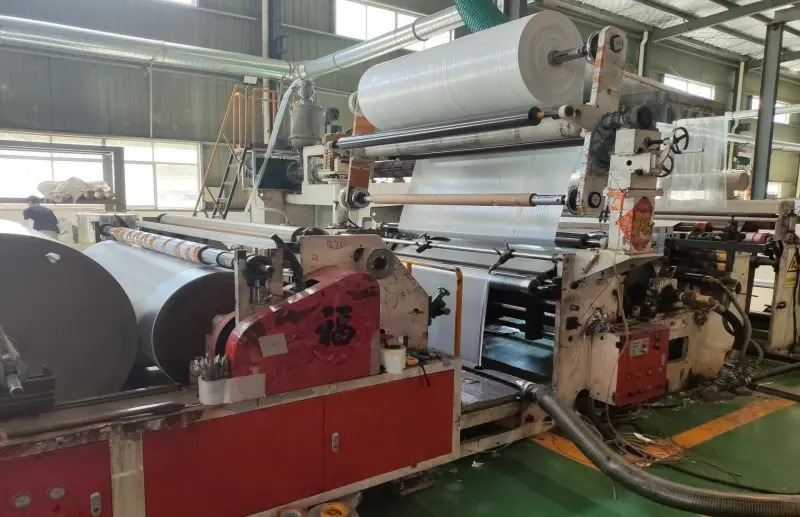
Lamination quality depends on more than the visible appearance of the foil surface. Adhesive application, web tension, curing conditions, alignment and winding all affect whether a composite performs reliably during conversion and installation. Our production approach therefore focuses on controlled input materials and repeatable processing. Incoming substrates can be checked against agreed specifications, while in-process observation helps identify wrinkles, edge movement, uneven bonding or surface damage. Finished material may be reviewed for dimensions, roll condition, visual defects and bond integrity according to the confirmed order requirements. Where a customer requires specific performance data, the test method, sampling plan and acceptance limit should be agreed before production because values such as peel strength, water-vapor transmission, reflectivity and flame behavior depend on the full construction and test standard. Clear documentation prevents general marketing descriptions from being mistaken for project-specific certification and helps technical teams evaluate the material on a consistent basis.
Sampling, Scale-Up and Delivery
Custom development normally progresses from requirement confirmation to sample construction, customer evaluation, adjustment and production approval. A sample allows the customer to check the material on actual equipment or in a representative assembly before committing to a large order. Feedback should cover not only whether the sample looks acceptable, but also whether it unwinds correctly, bonds to adjacent components, cuts cleanly and tolerates the intended installation or converting process. If changes are needed, the layer combination or production parameters can be refined and documented. During scale-up, attention is paid to the differences between a small trial and continuous roll production, including tension stability, curing time and finished-roll handling. Export packing, labeling and roll protection can be matched to shipping conditions. For recurring programs, keeping the approved specification, sample reference and packaging standard aligned makes reordering easier and reduces the risk of unintended changes between batches.
Value for OEM and ODM Customers
The purpose of the service is to give customers a practical route from a functional idea to a manufacturable composite material. OEM customers can source a structure developed to their drawings or specifications, while ODM cooperation can begin with a performance problem and progress through material recommendations and sample evaluation. Working with one lamination partner can simplify communication across foil, film, reinforcement and coating layers, especially when the buyer would otherwise need to coordinate several suppliers. Custom-width production may reduce waste and secondary processing, while a documented structure supports purchasing consistency. The greatest value comes from early technical communication: sharing the real application, processing method and critical failure risks allows the material to be designed around the job it must perform. Whether the final use is a reflective roof underlay, reinforced insulation facing, moisture-barrier film or specialty industrial laminate, the service aims to balance performance, processability, cost and reliable supply.
Information Needed to Start
Customers can accelerate the project by providing a target layer structure, current material sample, drawing, expected annual volume and details of the downstream process. If no final specification exists, photographs of the application and a list of required functions are a useful starting point. It is also important to state the destination market, applicable test standards, preferred roll width, maximum roll diameter, core size, packing method and any restrictions on adhesive or substrate chemistry. Commercial targets should be discussed together with technical priorities because several structures may deliver similar functions at different cost levels. Our team reviews the information, identifies missing decisions and proposes a sampling route. Confidential project information can be limited to what is necessary for material development. The clearer the initial brief, the easier it is to select realistic inputs, estimate trial requirements and avoid changes after production planning has begun. This preparation helps both parties use development time efficiently and creates a reliable basis for quotation, approval and future supply.